Happy New Year SVG Review: A Designer’s Take on Real-World Embroidery Use
As a designer who spends half my life staring at stitch lines and the other half worrying about client satisfaction, I don’t just look for "pretty" graphics. I look for functionality. When evaluating a Happy New Year SVG, DXF, PNG, EPS, PDF set for potential use in a commercial embroidery project, I am looking for clarity, versatility, and ease of digitization. The product description highlights two versions, including a black color option, which immediately signals that this design is intended for high-contrast applications like t-shirts and mugs. But does it hold up when translated into thread? Let’s break down how this design asset performs in real-life scenarios.
First Impressions and Visual Personality
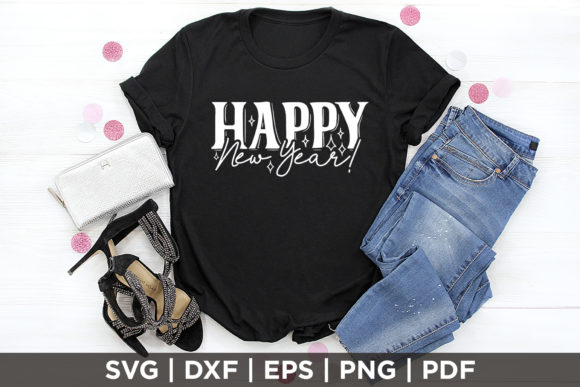
The immediate mood of this design is celebratory but clean. In the crowded market of holiday crafts, there is often a temptation to overcomplicate designs with excessive glitter effects or tiny, unreadable text. This particular embroidery file seems to avoid that trap. By offering a version in black, the creator has provided a solid foundation for dark fabrics, which are notoriously difficult to work with if the underlying vector isn’t structured well.
From a layout perspective, the quote format suggests a typographic focus. For an embroidery designer, typography is both a blessing and a curse. It allows for quick recognition but requires precise kerning and spacing to ensure the letters don’t merge during the stitching process. The inclusion of multiple formats (SVG, DXF, PNG, EPS, PDF) indicates that this is a versatile digital embroidery file meant to bridge the gap between vector cutting and machine embroidery. The black version likely serves as a strong base for applique techniques or dense fill stitches, while the colored version offers more creative freedom for multi-thread projects.
Real-World Application: The Custom Tote Bag Scenario
To truly test a design, you have to imagine it on a finished product. Let’s say I am preparing a batch of custom embroidered tote bags for a boutique holiday gift shop. These are high-volume items, often sold as part of a "New Year's Resolution" kit alongside journals and planners. The customer wants something durable, stylish, and clearly festive without looking cheap.
Placing the Happy New Year SVG, DXF, PNG, EPS, PDF design on the front center of a canvas tote bag is a classic move. Here is where the design’s structure matters. If the design relies heavily on tiny running stitches for details, those threads might get lost in the thick weave of a canvas bag. However, if the design utilizes bold fill stitch areas or clean satin stitch outlines for the lettering, it will pop against the fabric texture. The black version of the design would be particularly effective here, perhaps stitched in white or metallic gold thread to create a striking contrast against a navy or black tote. This kind of custom apparel accessory appeals to buyers who want subtle branding rather than loud, overwhelming graphics.
Performance Across Different Media
This design claims to be perfect for t-shirts and mugs, but its utility extends far beyond those basics. As a craft business owner, I see the potential for this asset in several key categories:
- Apparel Decorators: On sweatshirts or hoodies, the design can serve as a chest-level logo or a large back print. The stability of the vector ensures that scaling the design up or down won’t result in pixelation before digitization.
- Baby Items: For onesies or burp cloths, the clean lines of the quote make it easy to read even on small hoop sizes. Parents love personalized gifts, and a simple "Happy New Year" motif is timeless.
- Kitchen Textiles: Tea towels and aprons are excellent sellers during the holiday season. The design fits well in the corner of a tea towel or centered on an apron pocket. The durability of the embroidery is crucial here, as these items undergo frequent washing.
- Patches and Badges: If the design includes a border or enough negative space, it can easily be converted into an embroidered patch. This adds value to the final product, allowing customers to attach the design to jackets, hats, or bags.
Where Caution Is Required
Not every surface is created equal. While this design is versatile, there are specific situations where an experienced designer should exercise caution:
- Small Hoop Sizes: If the design contains intricate details or very thin lines, testing it in a 4x4 inch hoop first is essential. Tiny elements can disappear or become distorted if the stabilizer shifts during stitching.
- Textured Fabrics: Stitching on bouclé, heavy denim, or fuzzy fleece can obscure fine details. The design works best on smooth surfaces like cotton twill, jersey, or felt where the needle can penetrate cleanly.
- Stretchy Fabrics: When working on knit fabrics for t-shirts or baby clothes, proper stabilizer usage is non-negotiable. Without it, the stitch density can pucker the fabric, ruining the professional look of the finished product.
- Dense Stitch Areas: If the design uses large blocks of solid color, ensure your machine can handle the thread load. Excessive density can lead to thread breaks or needle deflection, especially on older machines.
Impact on Brand Consistency and Customer Trust
In the world of Etsy sellers and handmade shops, presentation is everything. Using a high-quality, well-structured design asset directly impacts customer trust. A sloppy or poorly scaled design can make a brand look amateurish, whereas a crisp, professionally executed embroidery project reinforces the value of the item.
The availability of a black version is a smart touch for brand consistency. It allows a seller to maintain a cohesive color palette across different products—perhaps using the black version for dark merchandise and the colored version for light backgrounds. This flexibility helps in creating a unified small shop product line that looks intentional and curated.
Practical Designer Notes for Implementation
Before committing to a full production run, follow these practical steps to ensure success:
- Test on Scrap Fabric: Always run a test stitch on the same type of fabric and stabilizer you plan to use for the final product. This reveals issues with tension, thread balance, or hooping pressure.
- Check Thread Color Contrast: Ensure that the chosen thread colors provide sufficient contrast against the fabric. The black version of the design is ideal for dark fabrics, but verify that the thread doesn’t blend in too much.
- Review Stitch Density: Adjust the stitch density if necessary. Some designs come pre-digitized with densities that may be too heavy for delicate fabrics or too light for sturdy ones.
- Confirm Licensing: Before selling finished items, double-check the license terms included with the Happy New Year SVG, DXF, PNG, EPS, PDF package. Ensure you have the right to sell physical goods made from the design, especially if you are a commercial entity.
- Create Printable Mockups: Use the PNG or JPG files to create realistic mockups for your online store. This helps customers visualize the final product and can increase conversion rates.
Ultimately, the Happy New Year SVG, DXF, PNG, EPS, PDF set offers a solid foundation for holiday-themed embroidery projects. Its dual-version approach provides flexibility, and its clean design makes it suitable for a wide range of applications, from personal gifts to commercial merchandise. By paying attention to fabric choice, stabilizer support, and stitch quality, designers can transform this digital asset into a polished, professional handmade product that stands out in any market.