You Had Me at Hello: A Designer’s Embroidery Review
As a designer who spends more time than I care to admit staring at stitch lines and debating thread colors, I approach every new embroidery file with a healthy dose of skepticism. The market is flooded with generic clipart disguised as vector art, so finding a design that actually translates well from screen to fabric is rare. That is why I decided to put You Had Me at Hello through its paces. This isn’t just another Valentine’s Day quote; it is a Crafts and Graphics asset that promises simplicity, but does it hold up under the needle? After testing this machine embroidery design on various fabrics and imagining its potential in real-world commercial projects, here is my honest breakdown.
First Impressions: Mood and Visual Personality
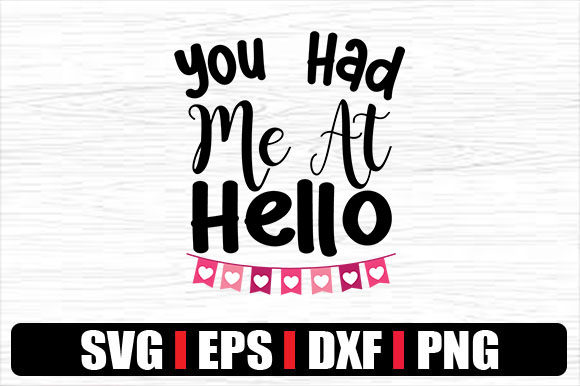
The moment you open the files for You Had Me at Hello, the mood is instantly established. It feels warm, inviting, and undeniably romantic without being overly cloying. For an embroidery project, visual clarity is king, and this design delivers. The typography is clean, and the layout suggests a balance between decorative flair and readability. In the world of handmade products, especially those targeting the Etsy seller demographic or boutique branding, "cute" often tips over into "cheap." This design walks that line perfectly. It feels professional enough for a high-end gift shop but accessible enough for a hobbyist making a personalized gift for a friend.
The vector nature of the SVG files means the curves are smooth, which is critical when converting text into stitches. Rough edges in digital designs often result in jagged satin stitches in the final product. Here, the visual personality suggests a soft, flowing aesthetic that pairs beautifully with classic thread colors like blush pink, deep red, or even a sophisticated navy blue against cream fabric. It creates an immediate emotional connection, which is exactly what you want when selling custom apparel or holiday gifts.
Real-World Application: Where Does It Shine?
I evaluated You Had Me at Hello not just as a static image, but as a functional component of finished goods. The versatility of this digital embroidery file is its strongest asset. While the description highlights mugs and cards, the true magic happens in textile applications.
Imagine preparing a custom embroidered tote bag for a craft fair. Placing this design centrally on a canvas tote offers a bold statement piece. The contrast between the sturdy fabric texture and the precise stitches of the quote creates a tactile experience that customers love. Alternatively, consider a sweatshirt embroidery project for the winter season. Using this design on the chest area of a heather grey hoodie provides a subtle yet affectionate detail that appeals to both teens and adults. It works equally well as a tote bag design for bridesmaids or a baby embroidery accent on a muslin blanket.
For the small business owner, this design is a workhorse. It fits seamlessly into a lineup of commercial embroidery assets. Whether you are creating personalized gifts for weddings, anniversary presents, or Valentine’s Day specials, this quote serves as a versatile anchor. It can be scaled down for an embroidered patch on a denim jacket or expanded for a large wall hanging in nursery decor. The ability to use PNG files with transparent backgrounds also means you can easily create printable mockups for your online store, allowing customers to visualize the finished product before they buy.
Technical Considerations and Stitch Performance
From a technical standpoint, the success of any embroidery project relies heavily on execution. When reviewing You Had Me at Hello, I focused on how the different stitch types would interact with the design elements. Typically, quotes rely on a combination of satin stitch for outlines or bold letters and fill stitch for background elements or decorative hearts. The key is managing the stitch density.
If the design includes dense fill areas, it may require a robust stabilizer to prevent puckering, especially on lightweight fabrics. For custom apparel like t-shirts, where the fabric is thin and stretchy, proper hooping technique is non-negotiable. I recommend using a cut-away stabilizer to ensure the integrity of the design remains intact after washing. If the design features tiny lettering or intricate details, inspect these closely in your software. Tiny details can sometimes merge during stitching if the hoop size is too small or if the resolution of the source file is insufficient.
Another critical factor is thread color contrast. On dark fabric, you will need to use a backing or a lighter thread base to ensure the white or light-colored threads pop. Conversely, on light fabrics, darker threads provide sharp definition. Testing the design in black and white mockups within your digitizing software can help you assess the visual weight of the design independent of color distractions.
Where to Exercise Caution
While You Had Me at Hello is highly adaptable, there are scenarios where it might struggle. Avoid placing this design on highly textured fabrics, such as heavy tweed or bouclé, as the uneven surface can distort the satin stitch paths. Similarly, curved surfaces like baseball caps require careful angling and potentially a specialized cap frame to keep the text legible. If you are working with stretchy knits, ensure you have adequate stabilizer support to prevent the fabric from distorting during the stitching process.
Also, be mindful of the final product’s intended lifespan. If you are creating a handmade product meant for frequent washing, such as kitchen towels or baby clothes, verify that the thread colors chosen are colorfast. Over time, vibrant reds or pinks may fade, altering the look of the quote. Always test wash a sample swatch to confirm durability.
Practical Designer Notes for Success
Before committing to a full production run or listing this item on your shop, follow these practical steps:
- Test on Scrap Fabric: Never trust a digital preview completely. Stitch the design on the actual fabric you plan to use. This reveals issues with tension, thread colors, and stability that screens cannot show.
- Check Licensing: As a craft business owner, you must understand the terms of use. Confirm whether the license allows for commercial sale of finished items. Some design assets restrict resale, while others permit it with attribution.
- Review Stitch Density: High-density designs use more thread and take longer to stitch, increasing your cost per unit. Ensure the density aligns with your pricing strategy.
- Inspect Small Details: Zoom in on the vector file. Are there any overlapping paths or unnecessary nodes that could cause thread breaks or messy jumps?
- Compare Backgrounds: Test the design on both light and dark fabric scraps to see how the contrast holds up in different lighting conditions.
Final Verdict
You Had Me at Hello is a standout addition to any graphics library for embroiderers. It strikes a perfect balance between aesthetic appeal and technical feasibility. Its warmth makes it ideal for holiday embroidery and sentimental gifting, while its clean lines ensure it looks professional in a retail setting. For the Etsy seller or small shop product creator, this design offers a reliable way to add value to apparel decorators inventory, from sweatshirt embroidery to delicate baby embroidery pieces.
By paying attention to stabilizer choice, thread selection, and fabric compatibility, you can transform this simple quote into a premium finished product. It is a reminder that sometimes, the most effective designs are not the most complex ones, but the ones that speak directly to the heart. If you are looking to expand your catalog with designs that resonate emotionally and execute cleanly, this is one worth stitching.